


Freedom to Dance
Our Biggest Wins:
-
2007 Launched Dance Parade, New York City's largest dance event
-
2017 Our efforts over 10 years helped repeal the racist Cabaret License Law
-
2024 We reformed zoning laws that restricted dance. Now you can dance anywhere that allows music.
-
2026 We lobbied New York State's State Liquor Authority to eliminate restrictions on dancing
Our Next Action:
-
2026 Lobby New York SLA to allow all forms of music as a 1st Amendment Right
Thank you Gov. Hochul for eliminating SLA restrictions on dancing. Types of Music should also not be regulated.
Like, Comment & Share our Call to Action Video:


Dance Police, Cabaret Law & Historic Injustice:

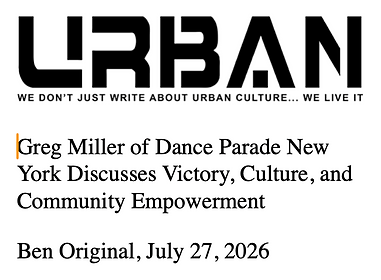
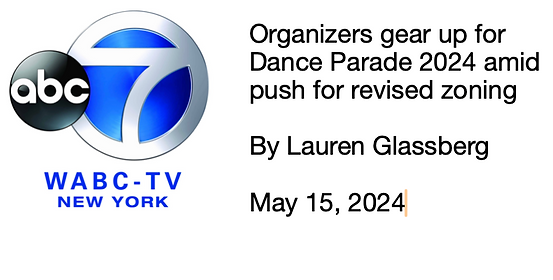
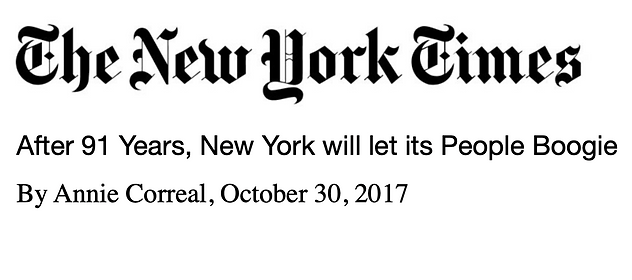
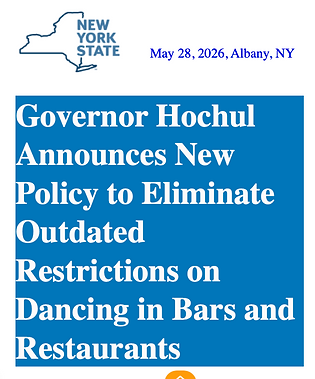
Media Coverage: 1987 - 2026





Let the Music Play New York 2026-2027 Campaign
For more than a century, New York's nightlife has been shaped by government regulations that have often targeted culture, music, and dance. Thanks to decades of advocacy by organizations including Dance Parade New York, Legalize Dancing NYC, the New York City Hospitality Alliance, The New York Nightlife Association, Metropolis in Motion, the Dance Liberation Front, the Dance Liberation Network, the NYC Artists Coalition, and others, major progress has been achieved. The repeal of New York City's Cabaret Law in 2017, the City of Yes zoning reforms in 2024, and the State Liquor Authority's elimination of dancing restrictions in 2026 removed some of the most significant barriers to social dancing and cultural expression. Yet one major form of government overreach remains.
Today, the New York State Liquor Authority (SLA) continues to use "Methods of Operation" and liquor license stipulations to restrict what types of music venues may present. Through a process heavily influenced by local Community Boards, bars, restaurants, and clubs are often required to agree to conditions that prohibit DJs, limit live music, or otherwise restrict entertainment as a condition of receiving or maintaining a liquor license.
The government should not be deciding what genres of music are allowed in licensed establishments. Whether a venue presents a DJ, live band, jazz ensemble, salsa night, hip-hop performance, electronic music event, or cultural celebration should be determined by business owners, artists, and patrons—not liquor regulators.
New York already has extensive laws governing public safety and venue operations. Occupancy limits, building codes, fire safety requirements, noise ordinances, security plans, and Alcoholic Beverage Control regulations provide ample oversight of licensed establishments. Additional restrictions on music programming are unnecessary, subjective, and often disproportionately affect emerging artists, immigrant communities, cultural traditions, and small independent businesses.
Music and dance are fundamental forms of cultural expression protected by the principles of free speech and free association. They foster community, support local economies, create jobs, and contribute to the vibrancy that makes New York one of the world's great cultural capitals.
According to a review of New York City liquor licenses, thousands of licensed establishments operate under individualized stipulations governing entertainment. These restrictions create uncertainty for business owners, discourage cultural programming, and grant government agencies excessive influence over artistic expression.
LegalizeDance.org believes that liquor licenses should regulate the responsible sale of alcohol—not dictate what music people may listen to or how communities choose to gather and celebrate. We support a regulatory framework based on objective public safety standards such as occupancy, fire safety, and noise compliance, rather than subjective restrictions on entertainment.
Our next campaign seeks to eliminate music-related liquor license stipulations and remove the State Liquor Authority from the role of regulating artistic expression. New Yorkers deserve the freedom to create, perform, listen, gather, and celebrate without unnecessary government interference.

From the Creative Protests of the 1990s...
...To the 2017 Repeal of the Cabaret Law
Heading 2
...To the January 24, 2024 City Planning Commission Hearing
City of Yes, Zoning for Economic Opportunity Intro Presentation, Matt Waskiewicz, 2hr 56min
Proposal 9 Testimony: (O) denotes oppositiion; (S) denotes support
(O) George Jane, Consultant to CBs 3:30:15
(S) Rob Bookman, Hospitality Alliance 3:42
(O) Council Member Christopher Marte 5:25:45
(S) Jerry Goldman, Dance Parade NY 6:22
(S) Council Member Keith Powers, 6:33
(S) Bronx Borough President Vanessa Gibson, 6:40:20
(S) Jeff Garcia, Exec Director Office of Nightlife 6:50
(O) Laura Sewell, East Village Community Coalition, 7:04
(S) Laura Goshinski, 7:10
(S) Mark McNulty, 7:14
(S) Deputy Commissioner of DOB, G Palmo 7:14:50
(O) Susan Stetzer, CB3 District Manager 7:30
(O) Andrea Gordilo, CB3 Board Chair 7:36:35
(S) Greg Miller, Exec Director Dance Parade & LegalizeDance.Org 8:51:15
(S) Sommay Jaijong Thai Restaurant Owner 8:54
(S) Funmilayo Chesney,Artistic Director Fusha Dance Company 8:58:50
(S) Parker Rameriez, Dancer & Choreographer 9:02:30
(S) Sandra Jaquez, Director of NYS Latino Bar, Restaurant & Lounge Association 9:08:30
(S) Michelle Joni, Owner/Operator Glinda the Good Bus 9:19:30
Our Work Continues -- Join us!
.png)
Association of Electronic Music Producers and DJs Inc.
Center for Remembering & Sharing
Evgeniya Entertainment. iDare Productions
Evolution Forward, Inc.
NYS Latino Restaurant Bar & Lounge Association
Pratt Center for Community Development
The Coalition of Musicians and Social Dancers to Eliminate Regulations against Dancing and Music
Supporters are asked to sign and post the Petition to Social Media:
Join the Dance Police (NYDP) Squad
Press inquiries: info@legalizedance.org Voicemail: 267-350-9213
